2026-11-22 ·
Exterior Paint Choices for Dayton Freeze-Thaw Cycles
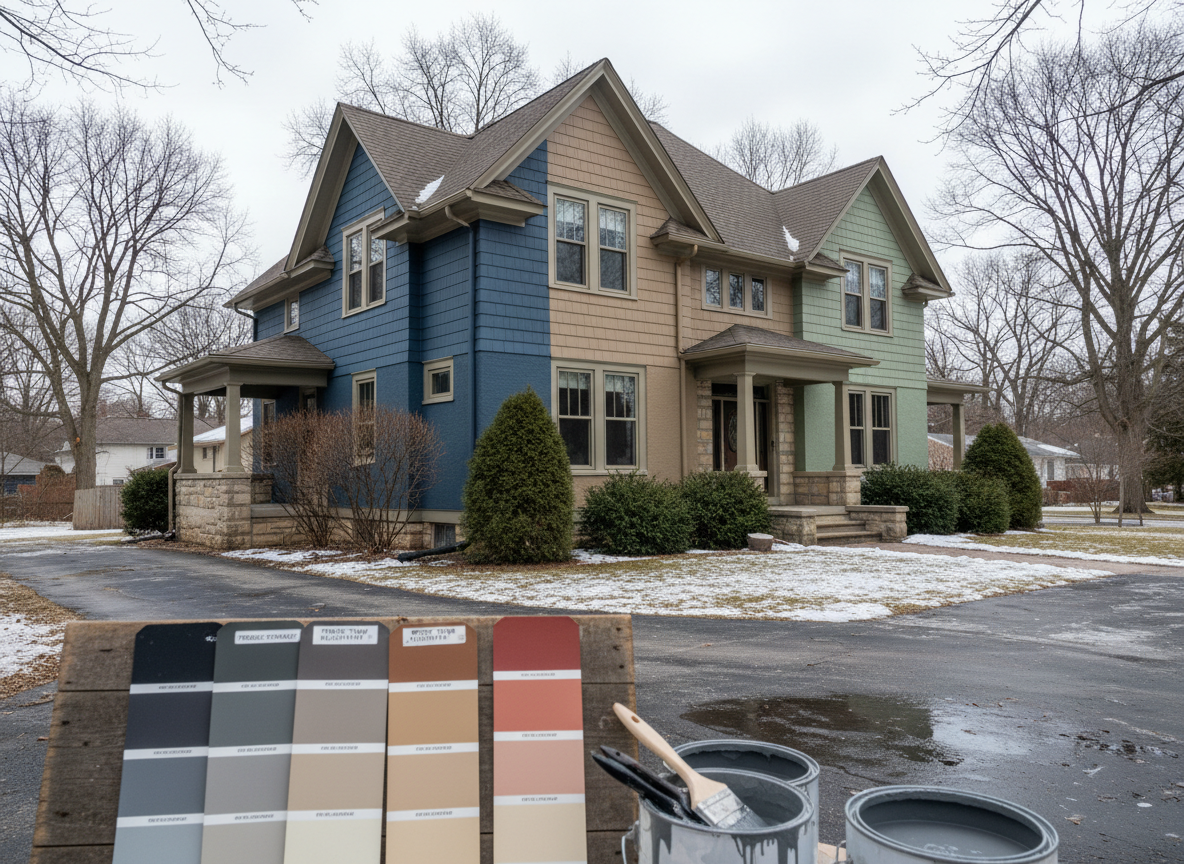
For Dayton homes facing freeze-thaw cycles, exterior paint choices center on flexible 100% acrylic latex formulas that expand and contract without cracking on wood siding and trim.
How Freeze-Thaw Cycles Affect Paint in Dayton
Montgomery County experiences repeated freeze-thaw cycles each winter that force moisture into small cracks where it expands and lifts paint films from older wood siding. Homes in Downtown Dayton, the Oregon District, South Park, and Belmont often carry original wood trim from the lead-paint era that has already developed peeling layers after decades of humid summers followed by sub-freezing nights. These conditions shorten the usable life of rigid coatings and make elasticity the main performance factor when selecting products. South-facing walls see the most sun and tend to show early cracking and alligatoring first. The short exterior painting window between spring thaw and fall further limits options to coatings that cure well yet stay pliable through the first winter.
Best Paint Formulations for Ohio Winters
100% acrylic latex paints are the usual choice for Dayton exteriors because they stay more flexible in cold weather than standard vinyl-acrylic blends. Look for products labeled for mildew resistance to handle humid summers, and check the minimum application temperature on the can. In areas like Kettering and Beavercreek, independent local painters often apply two coats over properly primed surfaces to build film thickness that bridges hairline cracks in aging siding. Oil-based topcoats tend to become brittle after repeated freeze-thaw exposure and can peel in sheets from wood grain. When cabinets inside 1980s and 1990s homes need a refresh too, those projects can move indoors once the exterior season ends.
Surface Preparation for Wood Siding and Trim
Thorough prep decides whether new paint survives the first winter on older Dayton homes. Scrape loose paint, sand feather edges, and seal bare wood with a quality primer before the freeze-thaw season returns. The step-by-step guide to prepping wood trim in older Dayton homes shows how to handle lead-paint-era layers safely on trim around windows and doors. Pressure washing removes chalk and mildew but must finish early enough for surfaces to dry completely. Independent local painters check for rot at the base of siding boards near foundations before any coating goes on, because paint cannot fix underlying moisture problems that worsen each spring thaw.
Choosing Sheens and Colors for Local Homes
Satin and eggshell sheens offer a good balance for Dayton exteriors because they hide surface imperfections on older siding yet clean more easily than flat finishes after summer pollen and winter road grime. Darker colors absorb more heat and can increase expansion on south walls, so lighter earth tones or historic palette colors reduce thermal stress. Siding painting projects often specify mildew-resistant formulas in these mid-range sheens. Trim usually gets a slightly higher sheen for contrast and durability around doors and windows that see the most handling and weather.
Maintenance Tips and Signs of Failure
Inspect painted exteriors each spring for bubbling along the bottom edges of siding boards and hairline cracks that open after freeze-thaw cycles. Touch up small areas promptly with the original product rather than waiting for widespread peeling. Clean gutters and maintain roof overhangs to limit water cascading onto painted surfaces during heavy summer storms. When paint chalks heavily or alligators across several walls, it usually signals the need for full removal and recoating rather than another layer. Exterior painting by an independent local painter can address these issues on homes throughout Montgomery County before damage reaches the wood.
Calling (773) 389-7672 connects you with an independent local painter who understands Dayton freeze-thaw demands on older homes. Pricing depends on the job and is discussed with the painter after you call.